Montenegro Moves Closer to EU Membership as Enlargement Accelerates
Montenegro is leading the race to become the EU’s 28th member after provisionally closing 18 negotiating chapters, while Albania, Ukraine and Moldova also gain momentum.
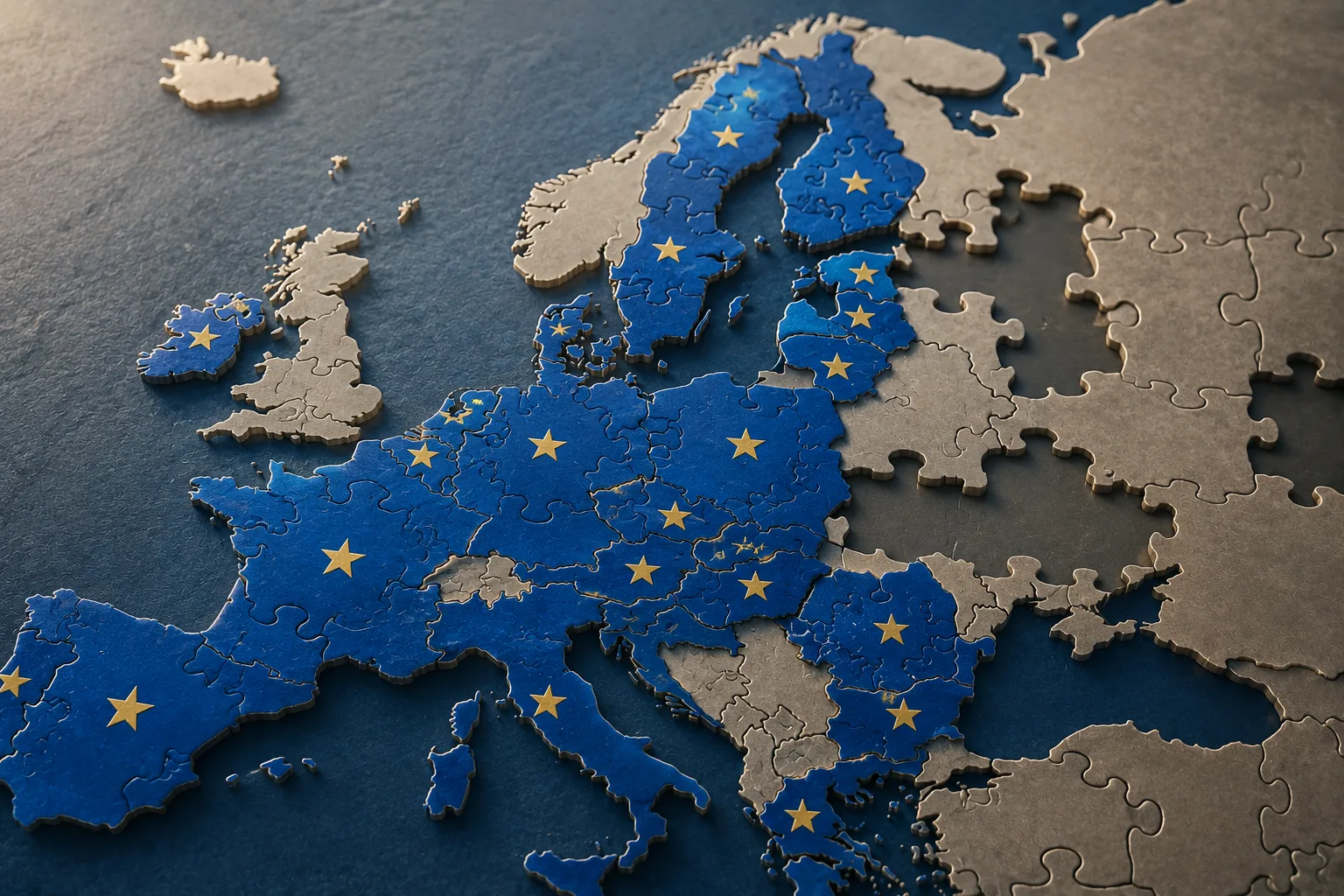
For more than 13 years, the European Union has remained a bloc of 27 countries. Croatia was the last country to join, on 1 July 2013. Since then, enlargement has often appeared less like an imminent political project and more like a distant promise to Europe’s neighbours.
That perception is changing. Russia’s war against Ukraine, intensifying geopolitical competition and renewed concern over European security have moved enlargement back towards the centre of the EU’s agenda. Brussels is increasingly confronting a strategic reality: leaving parts of Europe in a permanent geopolitical waiting room carries economic, political and security costs.
At the centre of this shift is Montenegro. Its EU accession bid is now the most advanced of any candidate country, making the small Adriatic state the clear frontrunner to become the Union’s 28th member.
Montenegro leads the EU enlargement race
Montenegro began accession negotiations with the EU on 29 June 2012. It has since opened all 33 negotiating chapters and, following the latest accession conference, provisionally closed 18 of them.
The pace accelerated sharply in 2026. Montenegro provisionally closed financial control in January and trans-European networks in March. Freedom of movement for workers and consumer and health protection followed in June.
The latest breakthrough came on 14 July, when the EU and Montenegro provisionally closed competition policy and the customs union. Those decisions raised the total from 16 to 18 chapters — more than half of all negotiating chapters.
The same day underlined the wider momentum behind enlargement. The EU held accession conferences with Montenegro, Albania, Ukraine and Moldova, advancing each country’s negotiations in different areas. The Council of the European Union described the four meetings as a significant step forward for the enlargement process.
What still stands between Montenegro and EU membership?
Podgorica wants to close its accession negotiations by the end of 2026. The European Commission’s 2025 Enlargement Package recognised that target while stressing the need for continued reforms and broad political consensus.
Preparatory work has already moved beyond routine chapter negotiations. EU member states agreed in 2026 to begin drafting Montenegro’s accession treaty, while the Commission presented a financial package for the country’s transition to EU membership.
Completing negotiations would not make membership automatic. Under the EU’s accession process, the remaining steps include an accession treaty and ratification by Montenegro and every EU member state. The timetable should therefore be viewed as a credible political objective, not a guaranteed entry date.
Which countries are waiting to join the EU?
The EU currently has nine official candidate countries: Montenegro, Serbia, Albania, North Macedonia, Bosnia and Herzegovina, Türkiye, Ukraine, Moldova and Georgia. Kosovo remains a potential candidate.
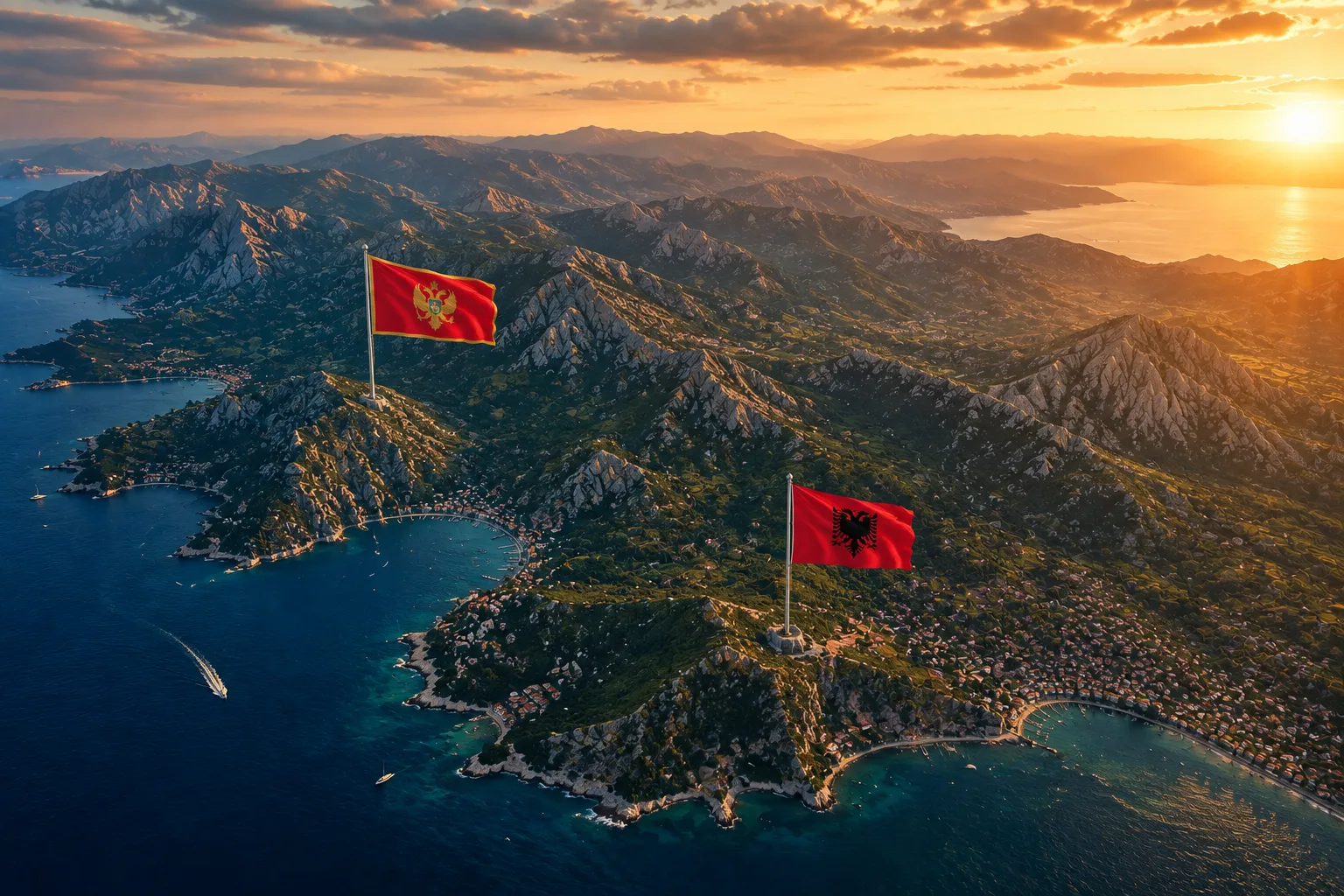
Their shared status masks large differences in progress. Montenegro is the frontrunner, but Albania is also gathering momentum. It has opened all 33 chapters and, on 14 July 2026, provisionally closed its first three: science and research, education and culture, and external relations.
Ukraine and Moldova are a different proposition. Both formally opened membership negotiations in June 2024. In 2026 they moved into substantive talks, first opening the fundamentals cluster in June and then the external relations cluster in July. Their progress gives EU enlargement an unmistakable security dimension.
Other candidates face more complicated paths. Serbia’s negotiations have advanced more slowly, while Bosnia and Herzegovina and North Macedonia continue to face political and institutional hurdles. Georgia’s accession process came to a de facto halt in 2024, and Türkiye’s negotiations have been at a standstill since 2018.
Could Montenegro become the EU’s 28th member?
On the current trajectory, Montenegro has the clearest path to becoming the EU’s 28th member. Its advantage is not only technical. As a small country with a limited economic and institutional footprint, it would be comparatively straightforward for the Union to absorb.
Politically, however, Montenegro’s accession would carry significance far beyond the country’s size. It would send a message across the Western Balkans that the membership process can still deliver a tangible result.
That credibility matters. Enlargement depends not only on reforms by candidate countries, but also on the EU’s willingness to grant membership when the conditions are met. After more than a decade without a new member, another prolonged period of ambiguity would risk weakening the influence the accession process once exercised across Central and Eastern Europe.
Albania appears increasingly well placed to follow Montenegro, although it remains behind in the negotiations. Ukraine and Moldova enjoy substantial political support, but their accession involves far more complex economic, institutional and security considerations. There is unlikely to be one enlargement timetable for every candidate.
EU enlargement is now a geopolitical project
The next enlargement will take place in a Europe fundamentally different from the one that welcomed Croatia in 2013.
The continent is dealing with war, pressure on economic competitiveness, demographic change, uncertainty over the future of transatlantic relations and growing competition for global influence. In this environment, the Western Balkans and Eastern Europe are no longer peripheral policy questions. They are part of the debate over Europe’s strategic cohesion.
The European Commission now describes enlargement as a political and geostrategic imperative. Yet urgency does not formally remove the conditions for membership. Accession remains a merit-based process, and candidates must demonstrate functioning democratic institutions, the rule of law, a competitive market economy and the capacity to implement EU legislation.
That creates the central tension behind Europe’s next enlargement. If Brussels accelerates accession mainly for geopolitical reasons, it risks weakening the credibility of its membership criteria. If it allows the process to drift back into indefinite stagnation, it risks losing influence in precisely the countries it wants anchored more firmly to Europe.
Montenegro has therefore become more than a small candidate country on the Adriatic. It is a test of whether the European Union can once again turn the promise of membership into political reality. The next enlargement may be modest in population and economic weight, but its geopolitical significance could be considerably larger.
Official EU sources
Council of the European Union: enlargement overview · Montenegro negotiations · July chapter closures · four accession conferences · Ukraine · Moldova. European Commission: Albania’s first chapter closures · 2025 Enlargement Package · steps towards joining the EU.