Austria’s Economy in 2026: Recovery Remains Weak
Austria has emerged from recession, but weak growth, high inflation and rising public debt continue to hold back the recovery in 2026.
GlobalTalent24 Analysis | August 2026
Austria has emerged from recession. Yet 2026 has so far failed to deliver the major economic comeback many had hoped for. The economy is growing again, but more slowly than expected. High prices, a weak industrial sector and pressure on public finances leave little room for optimism.
According to the European Commission’s latest forecast, Austria’s GDP is expected to grow by just 0.6% in 2026. Inflation is projected at around 3%, while unemployment is forecast at approximately 5.8%. At the same time, the budget deficit is likely to remain above 4% of GDP.
For a country long regarded as one of Europe’s most stable economies, the key question is no longer simply whether the recession is over. What matters now is how quickly Austria can regain economic momentum and competitiveness.
European Commission – Economic Forecast for Austria
Austria’s economy to grow by just 0.6% in 2026
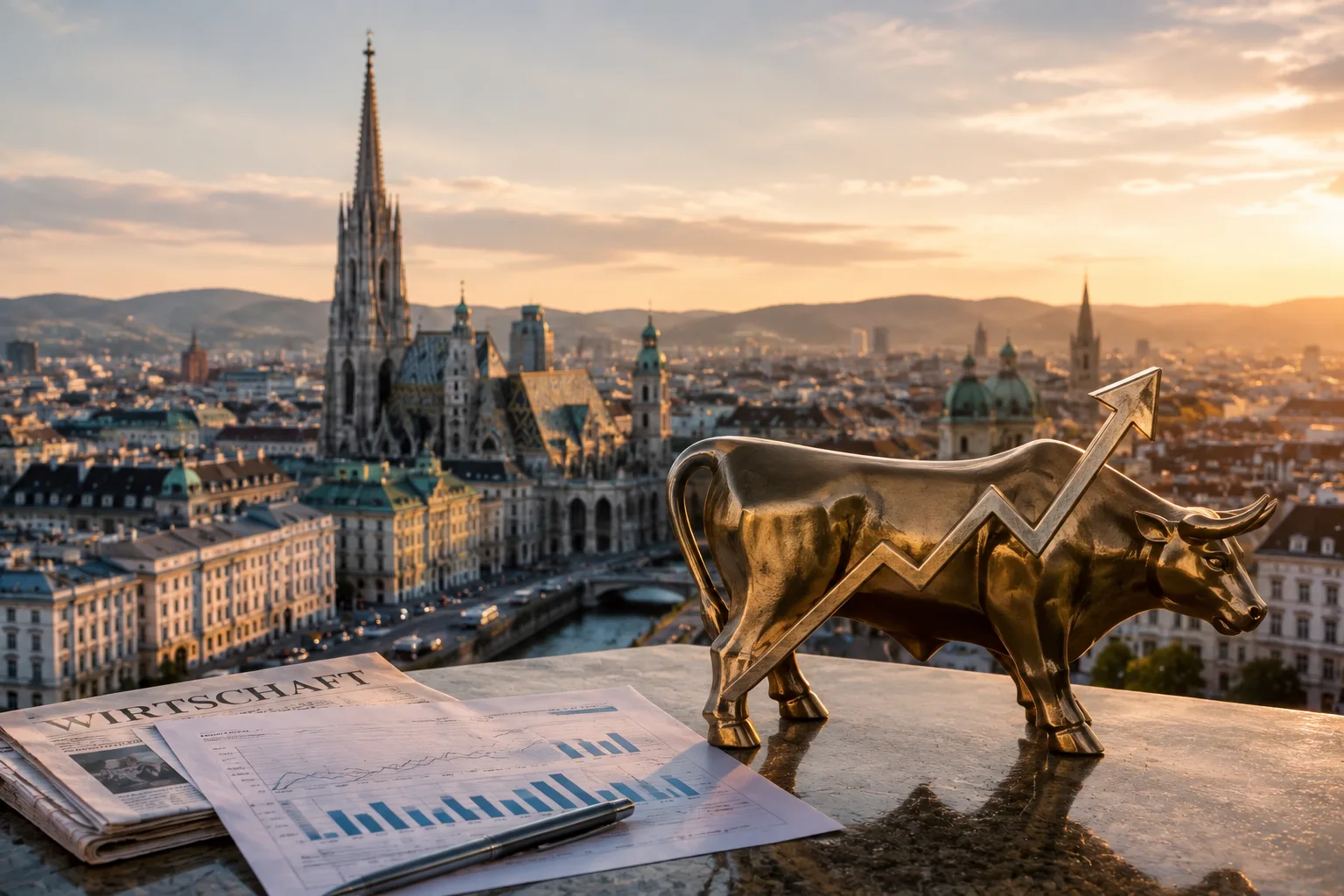
Illustration: Austria’s economy against the Vienna skyline.
The beginning of 2026 initially brought signs of stabilisation. Industrial production recovered, investment activity showed early positive signals and confidence improved in parts of the economy.
However, the international environment remains fragile.
Renewed pressure from energy prices is once again raising costs for businesses and households. According to the European Commission, energy inflation reached 11% in April after having been negative at the start of the year.
This development comes at an unfavourable time for Austria. The country’s industrial sector depends heavily on exports, European demand and competitive production costs. When energy costs rise, that economic model quickly comes under pressure.
Rising energy prices are slowing the recovery
The renewed price pressure is affecting businesses and households alike. Higher costs for fuel, transport and production can gradually feed through into food and service prices.
Energy-intensive companies are also losing competitiveness. This weighs on investment and makes a rapid recovery in Austrian industry more difficult.
Private consumption remains weak despite higher wages
Years of high inflation have changed the behaviour of many households. Wages have risen, but housing, energy, food and other everyday expenses have also become considerably more expensive.
The European Commission therefore expects private consumption to grow by only 0.5% in 2026.
This is one reason why the end of the recession does not yet feel like a genuine recovery for many people. If consumption remains weak, businesses will also lack important incentives for new investment and additional hiring.
Unemployment is rising – skilled workers remain scarce
The economic weakness is also visible in the labour market. The unemployment rate could rise to around 5.8% in 2026, up from 5.7% in the previous year.
At the same time, many Austrian industries still face shortages of qualified workers. This creates an unusual situation: unemployment may rise while companies continue to urgently seek staff in specific occupations.
AMS – Forecasts for Austria’s labour market
The budget deficit leaves the government little room to manoeuvre
In theory, a weak economy could be supported through higher public spending. Austria currently has little financial room to do so.
The budget deficit stood at 4.2% of GDP in 2025. The European Commission expects it to reach around 4.1% in 2026. Public debt could rise to 83.4% of GDP by the end of the year.
The government therefore needs to consolidate its finances while the economy simultaneously needs fresh stimulus.
This is one of the country’s biggest economic policy challenges. Excessive consolidation could slow growth even further. Insufficient savings, however, would increase deficits and debt while long-term expenditure on pensions, healthcare, long-term care and defence continues to rise.
OECD – Economic Survey Austria 2026
Why Austria is growing more slowly than the EU

Vienna panorama at sunset.
The scale of the challenge becomes particularly clear in a European comparison.
The European Commission expects Austria’s economy to grow by only 0.6% in 2026. Growth of around 1.1% is forecast for the European Union as a whole and approximately 0.9% for the euro area.
Austria is therefore once again falling behind the European average.
This raises a broader question: is the country merely experiencing an unusually slow recovery after two difficult years, or does Austria now have a structural competitiveness problem?
High energy costs, weak investment, demographic change and heavy dependence on European industry suggest there is no simple answer. Germany remains especially important. When German industry comes under pressure, Austrian companies usually feel the effects quickly.
Economic outlook: autumn will test the recovery
The coming months will show how resilient the recovery really is.
If energy prices stabilise, inflation continues to decline and households regain confidence, Austria could end the year with a significantly better outlook. If industry weakens again and unemployment continues to rise, 2026 could become another lost year between recession and genuine growth.
On 1 September 2026, Statistics Austria will publish detailed GDP data for the second quarter. A flash estimate for August inflation is also expected. These figures should provide an important indication of where Austria’s economy is heading in the final part of the year.
Statistics Austria – Gross domestic product and key aggregates
Austria’s real economic test starts now
Austria has formally left the recession behind. But the real test is only beginning.
For a country that spent decades building a reputation as a stable, prosperous and industrially strong economy, the greatest risk may not be another severe crisis. A prolonged period of weak growth could be more damaging, with Austria losing part of its economic lead in Europe year after year.
Sources: European Commission · OECD · Statistics Austria · AMS Austria