Health Insurance in Spain: Everything You Need to Know About Public and Private Healthcare
Find out who is entitled to public healthcare in Spain, what it covers, and when private health insurance may be advisable or required.
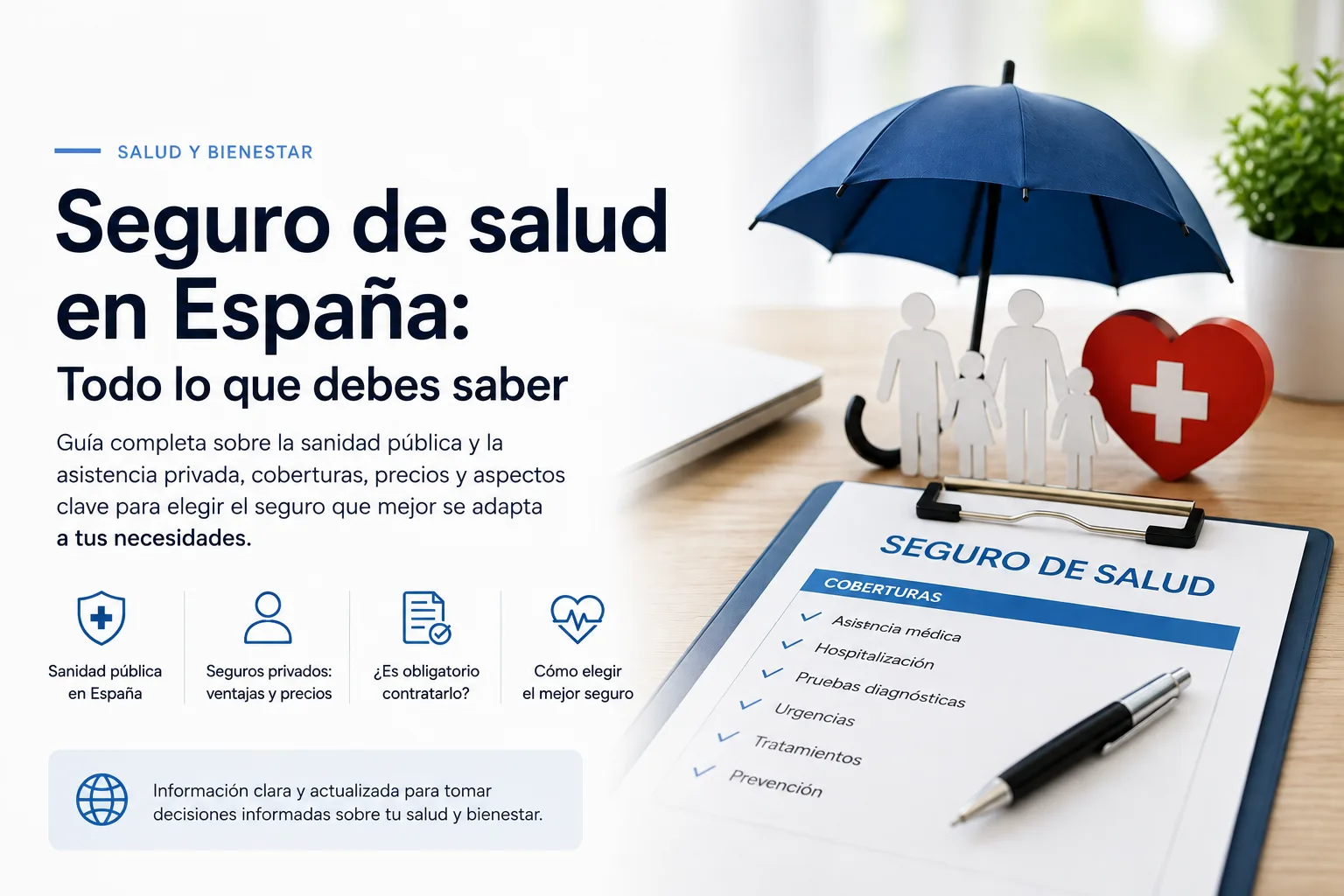
A healthcare system renowned for its quality
Spain’s healthcare system is regarded as one of the strongest and most efficient in Europe. Its model combines extensive public coverage with the possibility of accessing private medical services, offering people different options according to their needs. Thanks to this structure, Spain has maintained a high life expectancy for many years, together with a healthcare system that is recognized both nationally and internationally.
However, many people who arrive in the country or want to understand the Spanish healthcare system better have numerous questions. Is it mandatory to take out health insurance? Who is entitled to public healthcare? When is it advisable to choose private insurance? Understanding how the system is organized is essential for making informed decisions and selecting the most appropriate coverage.
How does the healthcare system work in Spain?
Healthcare in Spain is provided mainly through the Spanish National Health System, a publicly funded model that guarantees access to a broad range of medical services for people who meet the requirements established by law.
Workers affiliated with Social Security, pensioners, and other groups recognized by law are entitled to public healthcare. Once this entitlement has been confirmed, they can receive medical care at public health centers and hospitals throughout the country.
Although the general framework is common across Spain, the autonomous communities manage a large proportion of healthcare services. This means that certain administrative procedures or waiting times may vary slightly from one region to another, without affecting the right to access healthcare.
What does public healthcare cover?
Public healthcare covers primary care, consultations with specialists when the appropriate medical referral has been issued, hospital care, emergency services, numerous diagnostic tests, and a wide range of treatments.
The system also runs prevention programs, vaccination campaigns, and follow-up care for chronic diseases, with the aim of ensuring continuity of care for the population.
Many prescribed treatments receive public funding. However, in certain cases, patients must pay a percentage of the cost through the pharmaceutical co-payment system. The amount depends on the regulations in force and each insured person’s individual circumstances.
Why do so many people take out private health insurance?

Although public healthcare provides very comprehensive coverage, millions of people in Spain also choose to take out private health insurance. In most cases, this decision is motivated by a desire to reduce waiting times for certain consultations or diagnostic tests, gain direct access to specialists, or have greater freedom to choose the medical center where they receive treatment.
Private healthcare also tends to offer more flexible appointment scheduling and an extensive network of affiliated clinics and hospitals. For many families and professionals, the two options are complementary rather than mutually exclusive. While the public system guarantees essential healthcare coverage, private insurance provides greater convenience and freedom of choice.
How much does private health insurance cost?
The price of private health insurance depends on several factors. The insured person’s age, state of health, selected level of coverage, and the services included in the policy are among the factors that directly influence the monthly premium.
In general, basic health insurance policies usually cost between €40 and €70 per month. Policies offering broader coverage, access to a larger number of specialists, or additional services may cost more.
For this reason, price should not be the only criterion when making a decision. It is advisable to examine carefully which benefits each policy includes, whether any waiting periods apply, what the conditions of use are, and the actual extent of the coverage purchased.
Is private health insurance mandatory?
For most people who are entitled to public healthcare, private health insurance is not mandatory. However, a private policy may be required in certain administrative situations, particularly for some residence permit procedures or specific categories of stay in Spain.
Each case should be assessed individually, as the requirements may vary according to personal circumstances and the regulations applicable at the time.
What should you consider before choosing health insurance?
Choosing health insurance requires considering much more than the monthly premium. It is important to review carefully the scope of coverage, the available network of hospitals and specialists, any possible limitations in the contract, and the policy’s general terms and conditions.
A decision based solely on price may not be the best option in the long term. Taking the time to compare the available alternatives makes it easier to find insurance that suits a person’s actual needs and to avoid unexpected costs or limitations when medical services are required.
A model that combines protection, freedom, and quality healthcare
Spain’s healthcare system strikes a balance between strong public coverage and a broad private insurance market, allowing each person to choose the level of protection best suited to their individual circumstances. This combination has helped consolidate a healthcare model distinguished by its accessibility, the quality of its professionals, and the confidence it inspires in millions of people.
Before taking out any insurance policy, it is advisable to obtain detailed information, understand the rights provided by the Spanish National Health System, and compare the available alternatives carefully. A well-informed decision not only provides peace of mind, but also makes it possible to use existing healthcare resources effectively and maintain appropriate coverage for any future medical needs.
Official sources
The information published in this article is based on current legislation and official documentation from the principal institutions responsible for Spain’s healthcare system.
Spanish Ministry of Health: https://www.sanidad.gob.es/
Spanish National Health System (SNS): https://www.sanidad.gob.es/organizacion/sns
National Social Security Institute (INSS): https://www.seg-social.es/
Official State Gazette – Law 16/2003 on the Cohesion and Quality of the Spanish National Health System: https://www.boe.es/buscar/act.php?id=BOE-A-2003-10715