Zurich: How Much Does It Cost to Live in One of Switzerland’s Most Expensive and Prosperous Cities?
Zurich combines an exceptionally high cost of living with top salaries, a strong labour market and an outstanding quality of life. A closer look at rents, incomes and purchasing power.
Where high prices meet exceptional prosperity
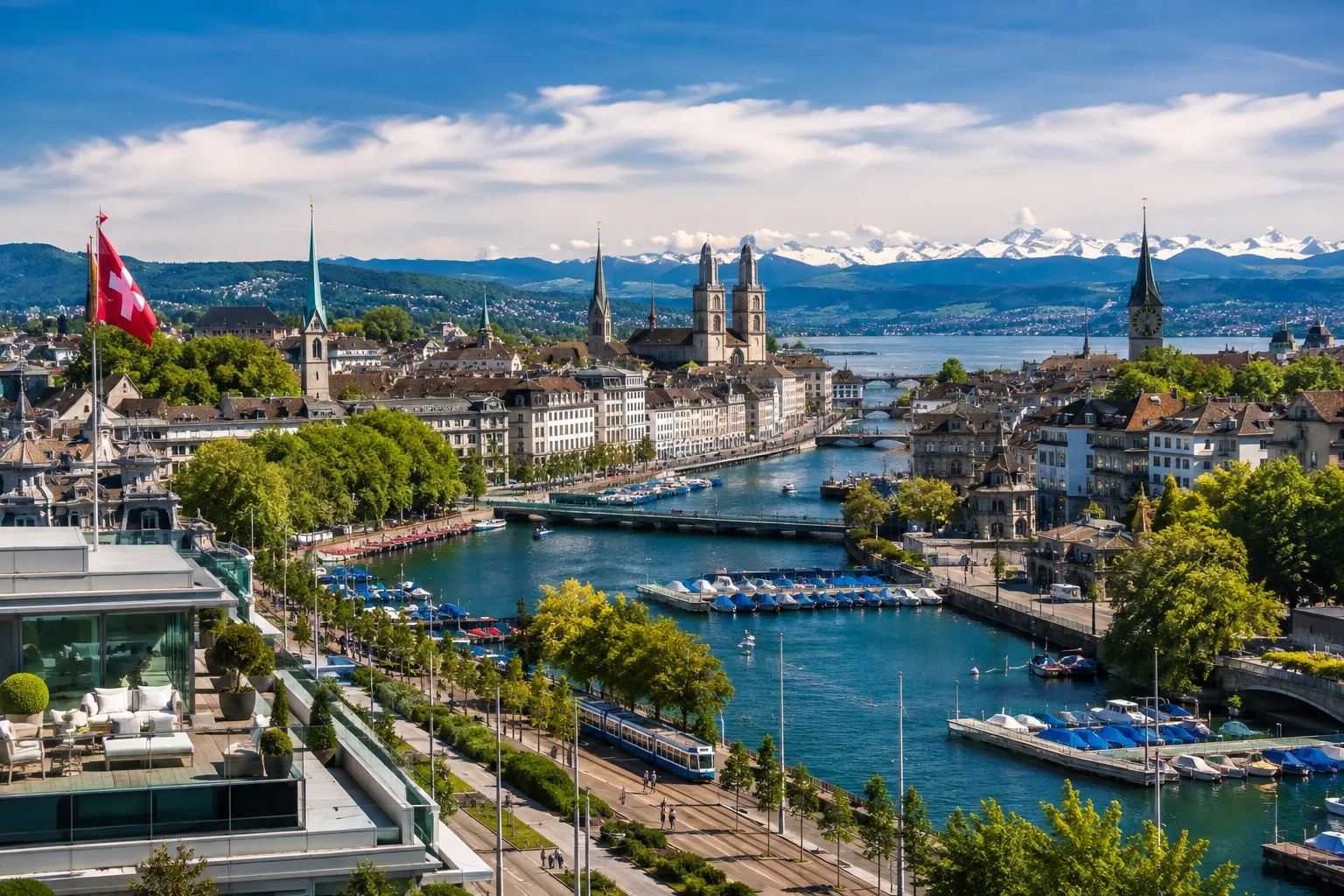
Zurich is one of those cities where economic success is immediately visible. International banks, insurance companies, technology firms, highly paid professionals and one of Europe’s most attractive labour markets all meet a housing market that has been under considerable pressure for years.
Switzerland’s largest city therefore represents a remarkable contradiction.
Life is expensive. At the same time, incomes, employment opportunities, infrastructure and quality of life are at a level that makes Zurich one of Europe’s most attractive business locations.
Anyone who looks only at prices is therefore seeing only half the story.
The decisive question is not simply how expensive Zurich is. It is how much economic strength is required for a city to continue attracting people, companies and international capital despite an exceptionally high cost of living.
Is Zurich really the most expensive city in Switzerland?
A clear answer is more difficult than it may initially seem.
There is no official Swiss statistic that names a single place as the country’s most expensive location every year. The answer depends on which costs are taken into account.
Zurich and Geneva regularly rank among the cities with particularly high housing costs and a high overall price level. Zug and several affluent municipalities surrounding the major economic centres can also be exceptionally expensive in certain areas.
Zurich nevertheless remains particularly interesting for a comprehensive analysis.
The city combines high housing costs with an exceptionally strong labour market, high incomes, internationally active companies and a quality of life that extends far beyond purely financial considerations.
Zurich is therefore less an example of a city that is simply expensive than of a city where high prices and strong economic performance meet directly.
Housing has become the decisive cost factor
Anyone seeking to understand why Zurich is perceived as expensive must begin with the housing market.
According to the official rent survey by Statistik Stadt Zürich, the median price per square metre rose from 20.5 to 21.8 Swiss francs between 2022 and 2024.
The median net rent for a three-room apartment was 1,578 francs per month in 2024. Two years earlier, it had been 1,470 francs.
These figures, however, tell only part of the story.
They refer to the existing housing stock. Anyone moving to Zurich and searching for an apartment on the open market may face a considerably more difficult reality.
The differences between individual districts are particularly striking.
According to municipal statistics, the median price per square metre for privately financed housing in Zurich’s old town was around 36 francs. For a 100-square-metre apartment, that corresponds mathematically to a monthly net rent of roughly 3,600 francs.
Riesbach followed at approximately 32 francs per square metre. Hottingen, Enge, Oberstrass and Fluntern were also among the most expensive residential areas.
Zurich is therefore not equally expensive everywhere.
The address can determine whether housing is merely costly or becomes one of the greatest financial burdens facing a household.
The housing question is changing perceptions of the city
High prices would be less problematic if sufficient housing were available.
That, however, is precisely what is lacking.
In the City of Zurich’s representative population survey for 2025, housing was named as the city’s biggest problem more frequently than any other issue for the first time since these surveys began.
Fifty-six per cent of respondents identified housing as one of Zurich’s greatest problems.
The assessment of supply is even more notable.
Around two thirds of respondents were dissatisfied with the available housing supply. At the same time, 71 per cent were satisfied with their own homes.
This reveals an interesting development.
Those who are already well housed in Zurich appreciate the city and often their own living situation. The challenge is greater for people searching for a new home, wishing to move or arriving in the city for the first time.
Zurich’s housing market is therefore no longer merely a social issue. It is increasingly becoming a factor in the city’s economic competitiveness.
Companies can offer highly attractive jobs. But if qualified professionals cannot find suitable or affordable housing, the housing issue also becomes a problem for employers.
High costs meet exceptionally high wages
Zurich could hardly remain so successful over the long term if its high cost of living were not matched by a similarly strong income base.
Switzerland is one of the countries with the highest wages in the world.
According to the Federal Statistical Office, the average Swiss gross annual salary was around 95,700 euros in a European comparison. This placed Switzerland first, ahead of Luxembourg.
The strength of the Swiss franc further amplifies this difference in international comparisons.
Yet high nominal incomes do not tell the entire story either.
To compare purchasing power, it is necessary to consider that goods, services and especially housing can be considerably more expensive in Switzerland than in many other European countries.
The Federal Statistical Office demonstrates precisely this effect.
Expressed in euros, annual Swiss salaries were far higher than those in neighbouring countries. Once differences in price levels were taken into account, this advantage shrank considerably.
Compared with Germany, for example, the Swiss salary was around 87 per cent higher when expressed in euros. After adjusting for purchasing power, the difference fell to about 33 per cent.
Switzerland therefore remains prosperous.
But an income in Swiss francs cannot be viewed as though it were being spent in a country with substantially lower prices.
Zurich is one of the country’s strongest salary regions
Within Switzerland, the Zurich region has traditionally held a particularly strong position.
The reason lies in its economic structure.
Financial services, insurance, corporate consulting, technology, research, pharmaceuticals and highly specialised services create an exceptional concentration of qualified and well-paid jobs.
This is complemented by an international labour market.
When competing for talent, Zurich’s banks, insurers, technology companies and multinational corporations have long looked beyond Basel, Bern and Geneva.
Their competitors are London, Frankfurt, Amsterdam, Paris, Singapore and New York.
High wages are therefore not merely a consequence of the high cost of living. They are also an expression of an economy that generates a substantial share of its value in highly skilled and capital-intensive industries.
What a high standard of living in Zurich really means
A standard of living cannot be defined by salary alone.
The Swiss Federal Statistical Office takes a much broader view of quality of life. Income and employment are part of it, alongside housing, health, education, environmental quality, personal safety, mobility, infrastructure, leisure and the wider social environment.
It is precisely this combination that explains much of Zurich’s appeal.
A person may pay considerably less for housing in another European city. That does not automatically mean they will have the same professional opportunities, infrastructure or purchasing power there.
Zurich demands a great deal from its residents financially.
In return, the city offers an environment in which the labour market, public services, transport, education, leisure opportunities and immediate access to nature are combined in a remarkable way.
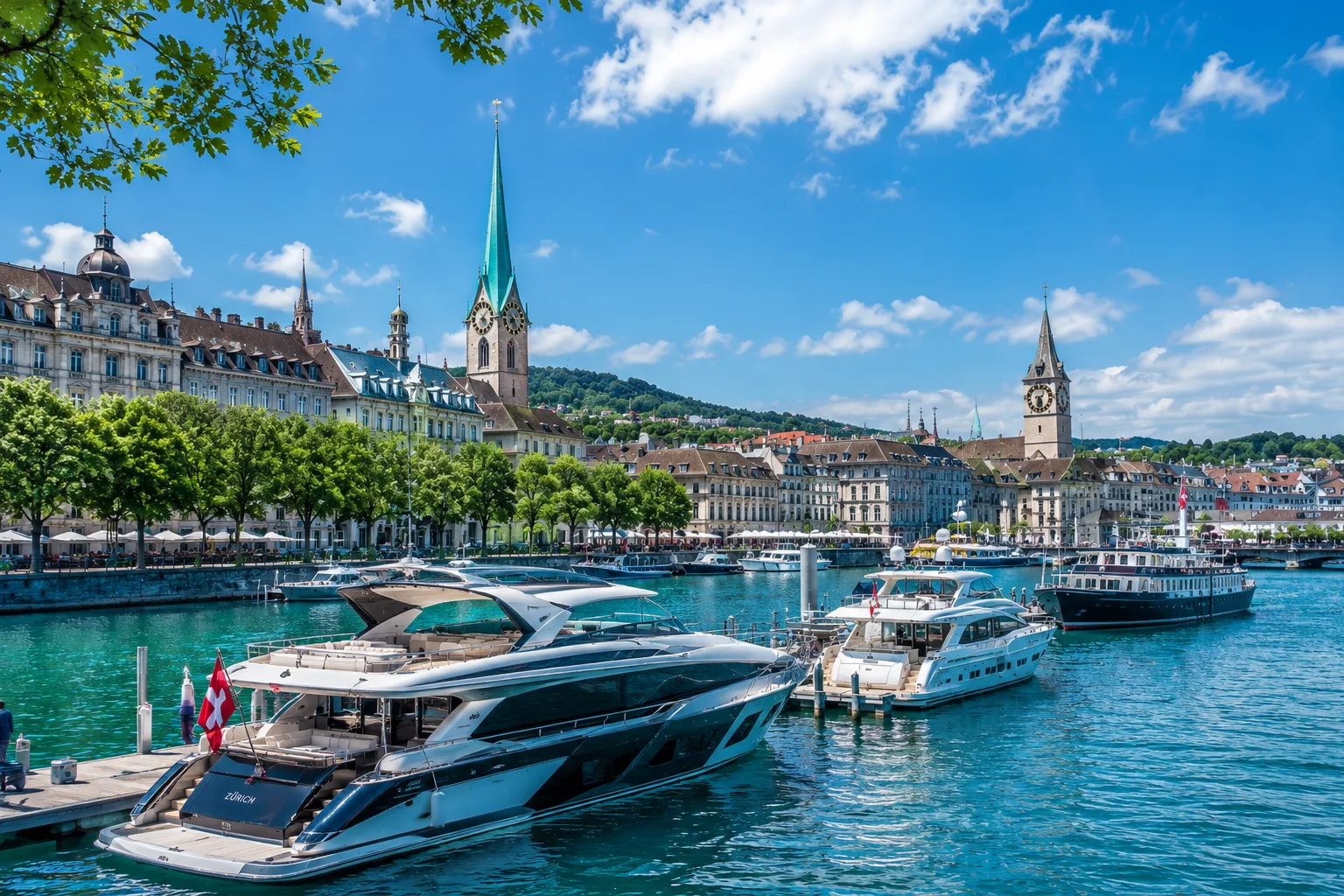
Lake Zurich is as much a part of everyday life as the dense public transport network. Mountains and recreational areas can be reached within a relatively short time.
This creates a form of prosperity that is not visible solely in a bank account.
Geneva remains Zurich’s main rival on costs
Any analysis of Switzerland’s most expensive cities would be incomplete without Geneva.
Housing costs are high there as well.
According to official data from the cantonal statistics office, the average monthly rent for a freely rented four-room apartment was 1,639 francs in 2025. For apartments let to new tenants within the previous twelve months, the figure had already reached 2,006 francs.
For five-room apartments, the corresponding figures were 1,959 and 2,496 francs.
Incomes are also high.
According to cantonal statistics, the median salary in the Canton of Geneva reached 7,893 francs per month in 2024, based on a standardised working week of 40 hours.
These figures make clear why the question of the most expensive city cannot be answered with a single price.
Geneva and Zurich both operate in an economic league where high wages and high living costs are simultaneously a reality.
The real luxury in Zurich is increasingly living space
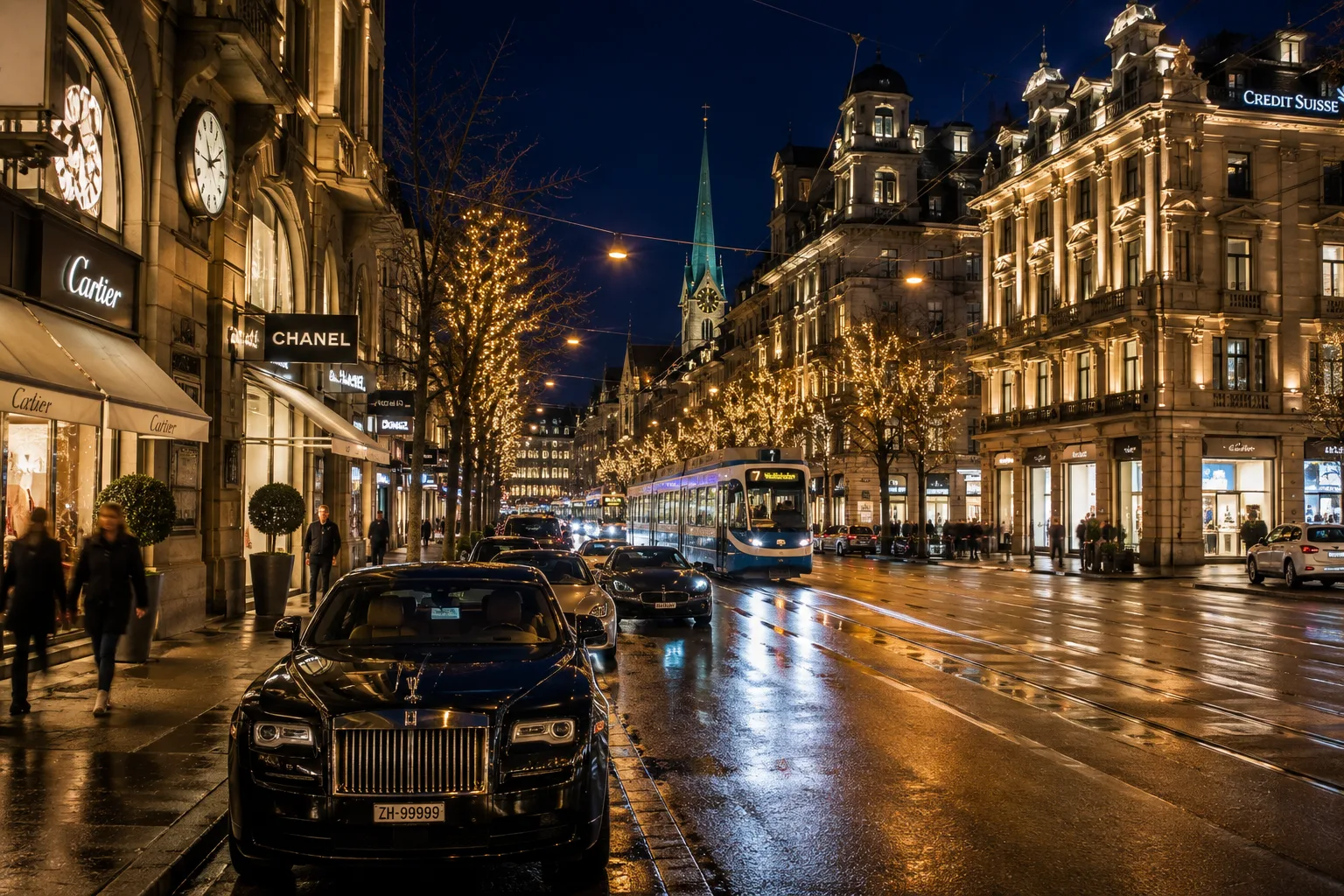
In affluent cities, luxury is often associated with cars, restaurants, watches or exclusive shops.
In Zurich, however, something far more ordinary is becoming increasingly valuable.
Space.
A well-located apartment with sufficient living space can be more financially significant than many traditional luxury goods.
Statistik Stadt Zürich shows that average living-space consumption in 2025 was 39.6 square metres per person.
For owner-occupied homes, the figure was 52.9 square metres. In municipal housing it was 32.3 square metres, while in cooperative housing it stood at 35.2 square metres.
These differences show that living space is not simply a matter of comfort.
In a densely populated and economically successful city, it is a scarce resource.
And scarcity has a price.
Why people still move to Zurich
The simplest way to avoid an extremely expensive city would be not to live there.
Yet Zurich continues to attract international professionals, entrepreneurs, students and investors.
The reason is economically understandable.
People do not compare costs alone. They compare opportunities.
A higher rent may appear acceptable if it is accompanied by a substantially higher income, better career prospects or more attractive long-term professional opportunities.
For international professionals, another factor also comes into play.
Switzerland offers political stability, a strong rule of law, an internationally competitive economy and a labour market in which specialised skills can be rewarded accordingly.
Zurich brings many of these advantages together within a relatively small area.
That is precisely what makes the city expensive.
And it is also what makes it so attractive.
A high standard of living has an entry price
Zurich demonstrates very clearly that prosperity and high living costs are often two sides of the same economic development.
Where companies pay high salaries, international professionals compete for jobs and capital seeks attractive locations, demand for housing, services and urban infrastructure also rises.
For people with well-paid employment, Zurich can therefore offer an exceptionally high standard of living.
For households on lower incomes, the same city can create considerable financial pressure.
The decisive dividing line is therefore not between expensive and inexpensive.
It lies between income and costs.
A salary that would represent prosperity in another European city may feel considerably less comfortable in Zurich. At the same time, despite the high prices, a Zurich income can still provide purchasing power that remains remarkable by international standards.
One of Europe’s most expensive cities, yet still a magnet
Zurich cannot meaningfully be reduced to the price of a coffee or the rent for an apartment.
The city is expensive because housing is scarce, services are costly and the population has high purchasing power.
At the same time, Zurich belongs to a country whose wage levels remain exceptionally high by international standards.
This explains the apparent contradiction.
High costs do not automatically drive people away when a city also offers high incomes, safety, infrastructure and professional opportunities.
Zurich is therefore less an example of how expensive life can become.
Instead, the city shows what price people and companies are prepared to pay when economic opportunities and quality of life come together in one place.
Perhaps that is the most fitting definition of Zurich’s prosperity.
People pay an exceptional amount to live in a place that, in return, offers an exceptional amount.
Official sources
The information in this article is based on publications by the Swiss Federal Statistical Office and the official statistical offices of the City of Zurich and the Canton of Geneva.
Federal Statistical Office, FSO
Official data on wages, the labour market, purchasing power, population and quality of life in Switzerland.
Statistik Stadt Zürich
Official data on rents, housing, population and living conditions in Zurich.
https://www.stadt-zuerich.ch/statistik
Office cantonal de la statistique Genève
Official statistical data on wages, rents, population and economic conditions in the Canton of Geneva.
Note for readers
This article is intended for general information. Living costs vary considerably depending on location, household size, income, lifestyle and personal circumstances. Rental prices in official statistics may also refer to existing tenancies and can therefore differ from the prices of homes currently being offered. Individual decisions should therefore take account of the latest data from the relevant authorities and the actual conditions in the housing market.